Land· CityMETER · Bangkok
Two price lenses on Bangkok condominiums
Condo Listing PricesThe Bangkok view contains 1,039 condominium buildings, with a displayed mean asking price of 134,032 baht per square metre and mean appraisal of 93,969. Putting the two kinds of value side by side creates a more focused starting point for questions about a project and its units.
A view inside CityMETER
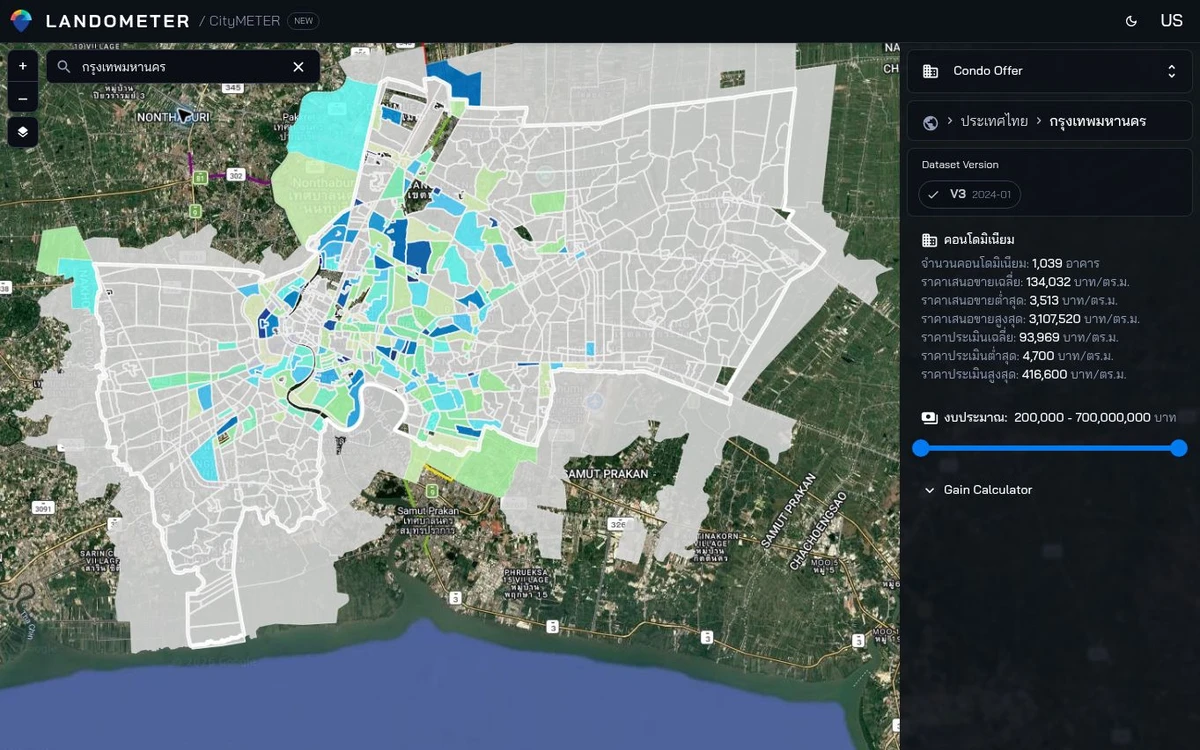
Bangkok view inspected on 10 October 2026 · building/project asking and appraisal values in THB per m².
- Data period
- Read the details in sources
- Coverage
- Read the details in sources
- Level of detail
- Condominium records · asking-to-appraisal comparisons
- Publisher
- Read the details in sources
Name the price before comparing it
In a condominium conversation, the word price can refer to different things. An asking price records an amount advertised; an appraisal provides an official valuation reference. Naming each one at the start helps a buyer and an analyst talk about the same comparison. This Bangkok view brings them together in a single unit, baht per square metre, so the initial reading is not dominated by differences in unit size. From that shared starting point, the work can move to the particular building, project and unit that someone is considering.
Use the gap to focus the enquiry
The two Bangkok averages show how the choice of price basis changes the picture. The next useful enquiry is whether the buildings relevant to a particular search show a similar relationship. Then gather the details that belong to the units themselves: floor, usable area, condition and asking terms. This gives the investigation an order. The map helps identify the records worth examining; the unit-level conversation provides the detail needed to understand them. A reader can therefore spend effort on a manageable set of projects connected to an actual purchase or research question.
Make the project the meeting point
Project and building identity are the meeting point of the two price layers. This matters especially where a development contains several buildings or different kinds of unit. Record what the selected item represents and keep the comparison on a consistent unit and time basis. In a shared assignment, a clear project or building reference lets the next person open the same place. The work remains attached to an identifiable property, rather than a familiar-sounding name or a broad neighbourhood average that may mean something different to each participant.
Leave with a useful shortlist
After reading the wider picture, choose projects that fit the intended area and budget. Carry three questions into the follow-up: what kind of unit does the asking record describe, which cycle does the appraisal use, and which details need confirmation with the seller? That short list gives the Bangkok figures a practical purpose. It can support a person looking for a home or a team studying a neighbourhood’s condominium market. The common achievement is a clearer enquiry: the same property, two named price references, and a defined set of details to establish next.
Explore your own place
Choose a project in the area of interest, match the building identity and prepare questions about the unit, appraisal cycle and asking terms.
Sources and reading notesPublisher, period, coverage and references
Related reference — exact data release not confirmed
- Data publisher
- Private asking-price layer + candidate Treasury benchmark
- Source
- Appraisal benchmarks reference the Treasury Department, while asking prices come from listings. Check project and building matches before comparing the two.
- Data period
- Period not confirmed — check the reference date in the data view before use.
- Coverage
- Geographic coverage is not stated on the public page
- Level of detail
- Condominium records and asking-to-appraisal comparisons; check unit and project grain
Read the references
Further notes for comparison or citation
These are asking prices. Check duplicates, units and room or project matching before comparing.
Asking prices are not closing prices; duplicate and outlier handling is not documented
Use the gap as an exploratory signal; project-level use requires duplicate, unit and join-method checks.