Tell ijji what’s happening. It brings together the shop and neighbourhood context available, narrows down the likeliest cause, then gives you one practical step to try and measure—on LINE.
For restaurants, cafés and other food shops · Free to try now
psychologyStart with the cause
You can see what’s going wrong. ijji helps you find where to start.
A promotion, a price cut or a new menu can feel like the quickest fix. But if the cause is somewhere else, the shop spends time and money without learning. ijji helps you check the likeliest cause first, then choose one step worth trying.
Tell ijji what you see → Check the likeliest cause → Try one step → Share the result → Adjust the next step
Before cutting prices, ask where the customers went. — Illustrative image
What the owner seesWhat may actually be happening
storefrontThe shop is quiet
The neighbourhood may truly be quieter—or people are still there, but the shop is not drawing them in.
directions_walkPeople pass by but do not come in
They notice the shop, but in that moment they still lack a clear reason to step inside.
sellDiscounts do not lift sales
Price may not be the issue. The menu may not communicate enough value for a quick decision.
scheduleSales have been flat for weeks
The shop may be selling at hours that do not match when people nearby are ready to buy.
storeA new competitor opens nearby
They may not have better food; they may simply be clearer, faster, or backed by more convincing reviews.
paymentsSales are good, but little is left over
Margins may be leaking through ingredient costs, fixed expenses, or opening hours when demand is low.
storefrontStart where your shop is today
Where is your shop today?
No long setup. Begin with the situation you’re in, and ijji will help you choose one useful step you can take now.
flagJust opened
“We’re open—but who nearby should we win over first?”
ijji says
ijji helps you see who is around the shop and which group is most promising to start with.
Pin your shop location
See the groups of people nearby
Choose a first action and capture the first signal
trending_flatSteady, but stuck
“We’ve tried a lot. What might actually move sales?”
ijji says
ijji looks for one lever worth testing first, then turns it into a small experiment with a number to watch.
Choose the problem that is bothering you most
Compare it with nearby people and their timing
Run a small test with a number you can track
trending_downSales are falling
“What do we need to fix first before things get worse?”
ijji says
You don’t have to fix everything tonight. ijji helps sort the symptoms, rank the likely causes and choose one priority.
Review the symptoms calmly
Rank the most likely causes
Follow a seven-day plan and check the result each day
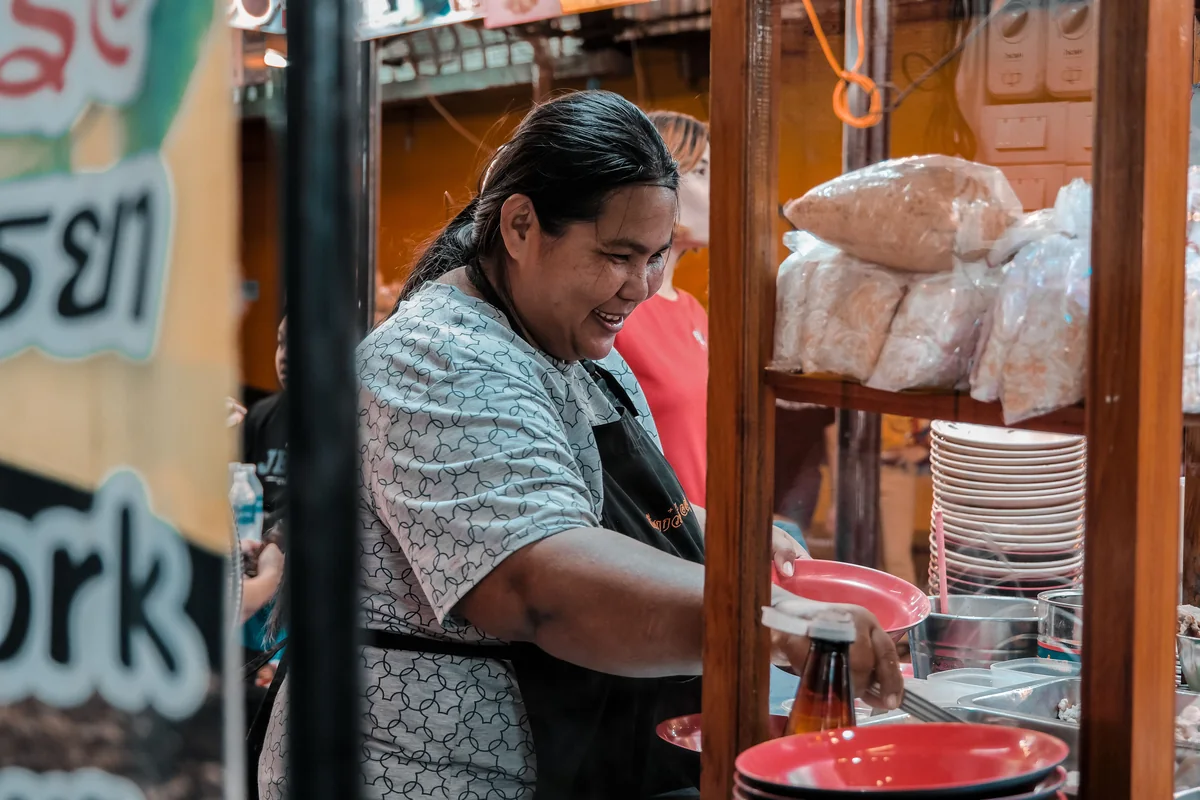
A street-side food shop in a local neighbourhood — an unedited image from the Landometer team; the person shown is not an ijji user.Customers are real people with rhythms of their own. ijji reads those rhythms before offering advice. — Illustrative image
mapYour neighbourhood · Before ijji suggests a move
A busy street doesn’t always mean a busy shop.
Lots of people nearby only matters if they can notice, stop and choose your shop in that moment. ijji looks at who is around, when they pass and what could fit that occasion—then helps you decide what the shop should try.
homeNeighbours
They return as part of a routine, with different patterns on weekdays and weekends—useful for repeat visits, regular favourites, and short delivery radiuses close to home.
luggageVisitors
They come for an occasion, often in groups, and search before arriving—useful for signature dishes, strong photos and reviews, weekends, and little indulgences.
commutePeople passing through
They move through at particular times and in a particular direction, often in a hurry—useful for quick ordering, grab-and-go, breakfast, lunch, and after work.
Before ijji calls it an opportunity, it checks four things.
Can they stop to buy?Are they ready to buy, or simply passing by?
What can they realistically buy then?Breakfast, a quick break, or something after work?
Can they see and enter the shop easily?Consider the sign, walking route, parking, and opening hours.
Is there an easier choice nearby?A competitor that is clearer and easier to choose.
Here is how ijji would put it
“A busy area is a good sign, but it isn’t a sales answer yet. First, let’s check whether people can stop, see the offer clearly and choose it in the time they have.”
chatWhat an ijji answer looks like
Not a generic answer. A next step that fits this shop.
ijji starts with what you tell it, checks the shop and neighbourhood context available, and separates the symptom from the likeliest cause. Then it gives you one action for today, a number to watch and a clear note on what is still uncertain.
Illustrative format based on a test shop in Khlong San, Bangkok—not a prediction for your shop.
chat_bubbleWhat you told ijji
Our shop is on a main road. People pass all day, especially in the morning and evening, but very few come in. We have changed the frontage and signs several times without seeing a difference.
lightbulbWhat may be getting in the way
People passing in the morning and evening may not quickly see what the shop sells, what it costs or whether it is open. That hesitation is the first thing worth testing.
There isn’t enough evidence yet to blame competitors. Let’s test clarity first—no discount needed yet.
groupsPeople around the shop
Office workers commuting through Sathorn–Silom in the morning and evening · residents of Charoen Nakhon–Khlong San condominiums · visitors heading to ICONSIAM
scheduleKey times
07:00–09:00 · 11:30–13:30 · 17:30–20:00
placeLocation opportunity
After-work commuters and condominium residents looking for a place to pause, with a clearly priced one-dish meal and drink visible immediately from the street.
storeCompetitor gap
Nearby shops focus on quick meals with no place to sit. This shop offers both food and drinks, but still lacks clear prices and an easy-to-understand set visible from the street.
compare_arrowsCompetitors included
Five nearby shops · the owner can edit the list
Action 1 / 7
checklistMake the offer clear in three seconds
There is no need to change the whole shop today. Put a freestanding sign where passers-by can see it at eye level. Show your top-selling dish alongside a signature drink, both with clear prices. From 3–5 metres away, people should understand within three seconds that they can get a filling, affordable meal here.
monitoringMeasure
The number of passers-by who stop to look at the sign for more than three seconds between 17:30 and 19:30.
warningWatch out
Do not cram in so many item names that the sign becomes hard to read. Focus on two or three key items with photos and clear prices.
When it’s done, send back one number. ijji will use it to shape tomorrow’s step.
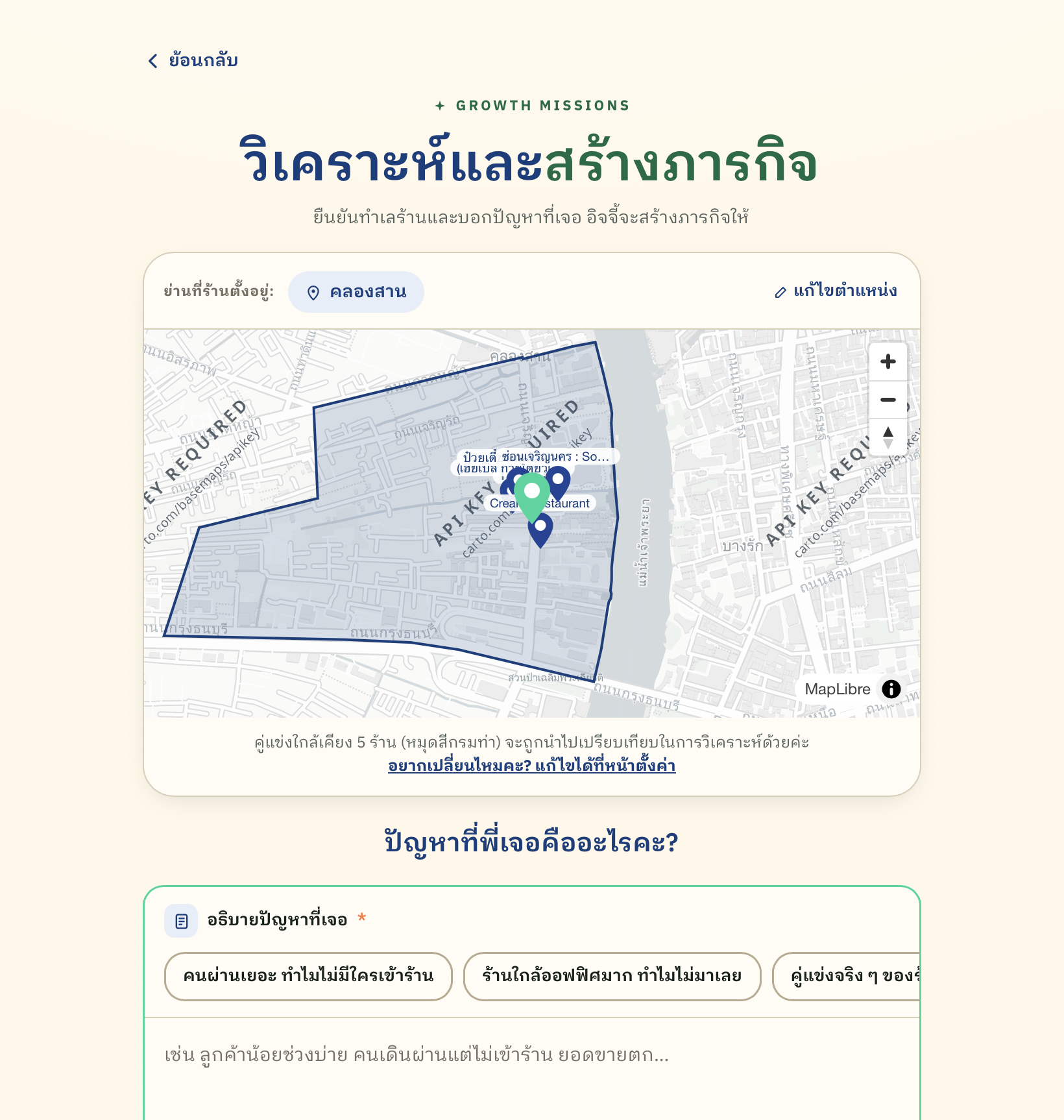
The real ijji interface — confirming the shop location and the competitors used for comparison before the owner describes the problem.
balanceHow the options compare
Advice is only useful when it fits your shop.
General AI needs you to bring the context. A dashboard leaves you to make sense of the numbers. A consultant can help, but often at a cost small shops can’t carry. ijji is built for the space between: it understands the shop and neighbourhood, gives you one move to try, and follows what happens next.
Comparison of general AI, data dashboards, consultants and ijji for local food-shop owners
checklistWhat the shop needs
smart_toyGeneral AI
monitoringData dashboard
support_agentConsultant
placeShop + neighbourhood
General AIedit_noteYou supply the context
Data dashboardquery_statsData to interpret
ConsultanthelpDepends on the brief
ijjicheck_circleBrings shop and neighbourhood context together
scheduleCustomer timing
General AIedit_noteOnly what you provide
Data dashboardmonitoringShown in charts
Consultantdirections_walkRequires fieldwork
ijjicheck_circlePeople and time of day
fact_checkLikely cause first
General AIpsychologyVaries by prompt
Data dashboardquery_statsYou draw the conclusion
Consultantfact_checkStrong, but costly
ijjicheck_circleLikely cause and confidence
todaySomething for today
General AIlightbulbBroad suggestions
Data dashboardhourglass_topTime needed to understand the charts first
Consultantevent_availableWithin the project scope
ijjicheck_circleOne action, a measure and a watch-out
syncWhat happens next
General AIhelpDepends on the plan
Data dashboardmonitoringYou monitor it
Consultantinventory_2Usually project-based
ijjisyncShare the result; ijji adjusts
forumEveryday use
General AIforumGeneral chat
Data dashboardcodeTechnical
ConsultantpersonVaries by adviser
ijjichat_bubbleShop-owner language on LINE
paymentsStarting price
General AIpaymentsFrom THB 700/month Before the conversation becomes genuinely useful
Data dashboardquery_statsFrom THB 20,000/month Plus a dashboard you still have to learn
ConsultantwarningTHB 200,000/month Hard for a small shop to afford
ijjicheck_circleFrom THB 29/question Free to try right now
Indicative starting prices supplied for this comparison; providers and plans vary. ijji pricing and free-trial availability are current for this release.
ijji won’t pretend to know more than the evidence allows.
Every answer shows how strong the signal is. When the picture is still thin, the first step is to gather one useful clue—not change the whole business.
check_circleClear enough to act
Several sources point in the same direction—the shop can act on the likely cause.
hourglass_topWorth a small test
Some evidence supports it—worth a measurable three-day test.
helpNeed one more signal
Gather more before deciding—the first action is to observe and count.
checklist12 everyday shop challenges
Start with the problem that keeps coming back.
No business jargon needed. Tell ijji what you’re seeing; it helps sort what to check first, what you can do now and what can wait.
groups01 · Getting noticed
Which people nearby should we try to bring in first?
“People pass all day, but no one turns in.”“What if the people around here were never our customers?”“Who should we focus on first—office workers or people who live in the side streets?”
door_open02 · Walking in
They can see the shop. Why are they still not buying?
“People stop to read the menu, then keep walking.”“Are they unsure about the price—or worried the wait will be too long?”“We have a sign and photos. What is still missing?”
add_shopping_cart03 · A little more per order
What might customers happily add to their order?
“They order one dish, drink water, and leave.”“How do we suggest an add-on without being pushy?”“Would a meal-and-drink set work for them—or only for us?”
schedule04 · Quiet hours
How can the empty hours earn more?
“From two to five, every table is empty.”“The lights and air-conditioning are on, the team is ready, but no customers come in.”“Should we close for the afternoon or find something that sells then?”
event_repeat05 · Coming back
How do we give nearby customers a reason to return?
“New customers come once, then disappear.”“Which places do people around here return to?”“We tried a loyalty card. They still do not come back.”
sell06 · Price and value
Which items could carry a price increase and still feel worth it?
“We are afraid customers will leave if prices rise, but we cannot keep them here.”“Do customers think it is expensive, or do they just not understand what they are getting?”“The shop next door charges more and still fills up.”
restaurant07 · Ingredient costs
Which dishes should we push—and which need caution?
“Ingredients cost more every month, but our prices have not moved.”“Is our bestseller also our lowest-margin dish?”“Which items could we remove without customers missing them?”
receipt_long08 · Fixed costs
Which dayparts could make better use of the rent and opening hours we already pay for?
“Rent arrives before the sales do, every month.”“Would longer hours cover the extra power and staffing?”“Our costs are the same, but sales are not.”
reviews09 · Reviews and ratings
What do reviews say we should build on or fix first?
“One three-star review is still sitting at the top.”“Customers say the food is good, but no one writes a review.”“Should we reply—or leave it alone?”
store10 · Nearby competition
What could make our shop meaningfully different in customers’ eyes?
“A new place opened next door and the queue is long.”“What are they doing better—or are they simply easier to notice?”“Do we need to do something they do not, or do the same thing better?”
room_service11 · Service
Which moments in the service journey stop a purchase or keep people from returning?
“Food is slow during the rush and customers look frustrated.”“Do we need more people, or just a better queue?”“Which customers genuinely cannot wait?”
trending_up12 · Growing the business
Where should the shop grow first—and where is the risk?
“People ask about delivery, but I do not know if it would pay off.”“Do we open a second branch, or fill this one first?”“How can we grow without putting a large sum at risk?”
Does one sound familiar? Ask ijji before you decide. Ask on LINE↗
Real people who run shops — illustrative images, not ijji users
favoriteBuilt for the person running the shop
You shouldn’t have to work it all out alone.
Running a shop means making dozens of decisions while doing the work itself. ijji doesn’t lecture or blame. It helps you pause, see what matters most and take one manageable step.
When sales rise, ijji helps you spot what worked. When they fall, it helps you find what to check first. And when the evidence is thin, it says so. Then it stays for the next round.
handshakeNo judgement. No blame.Every shop symptom is information, not someone’s fault.
fact_checkHonest about uncertaintyijji says when the picture is still thin, then suggests one useful way to learn more.
support_agentHere for the next questionThe more you share, the better ijji understands your shop—ask on LINE every day from 09:00–18:00.
rocket_launchTry ijji free
Start with the question on your mind today.
Pin your shop and tell ijji what’s happening. You’ll get a likely cause, one practical next step and a number to watch—without a long form.






 Ask on LINE