Location· CityMETER · Thailand
Reading a fuel-station network around a location
Fuel Stations: Count, Density & Fuel TypesThe displayed fuel and gas station inventory contains 8,736 locations. Selecting station type and brand turns that broad count into a network question for a particular location, followed by a practical choice of which sites to investigate on the ground.
A view inside CityMETER
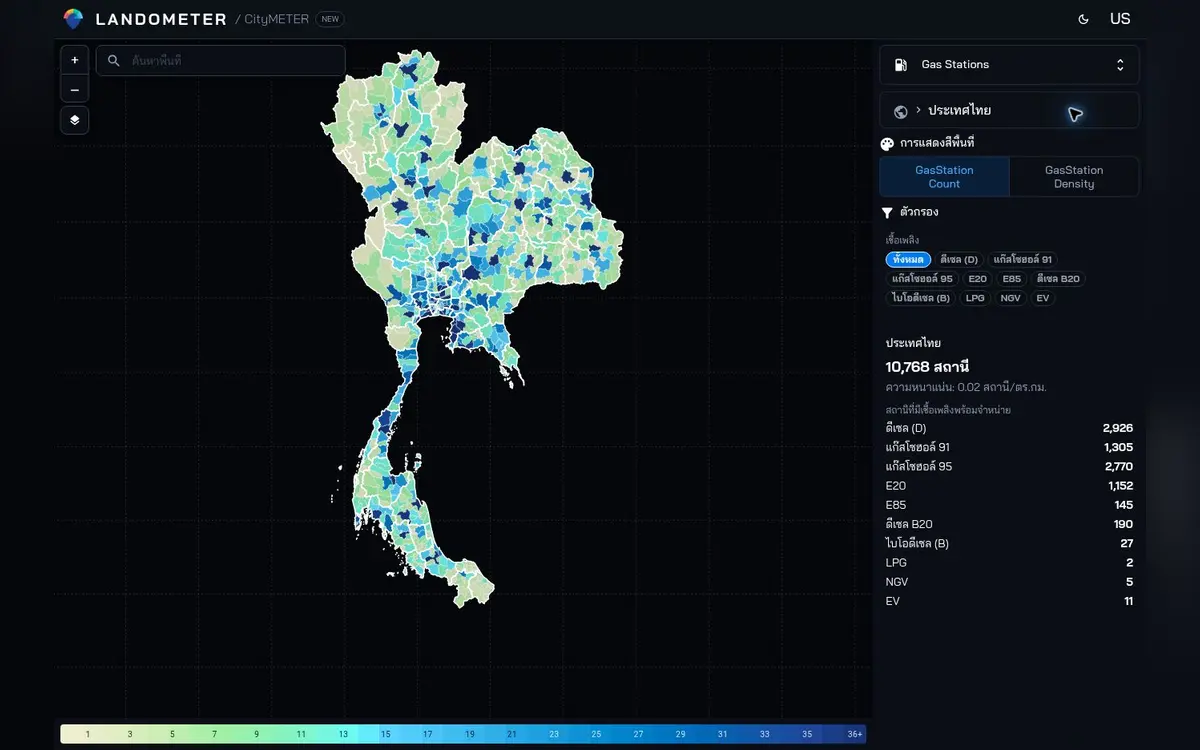
Thailand · inspected on 10 October 2026 · fuel and gas stations in the inventory · counts, density and station-count shares.
- Data period
- Read the details in sources
- Coverage
- Read the details in sources
- Level of detail
- Stations · brands · counts and density
- Publisher
- Read the details in sources
A brand name has a geography behind it
A location team may already know the networks it wants to compare. The map connects those names with station positions. Once the relevant station type and a shared area are selected, the network conversation has a clearer basis: these are the recorded locations under consideration. The team can then prepare questions about access and the details to inspect at each site. This gives a field visit a direction beyond driving past familiar names. It also makes the selection understandable to colleagues who will review the results later.
Keep the share tied to station counts
When reading a brand share, retain the station count and the selected brand set. Changing area or station type changes the comparison base. An explainable strategy note should state which networks are being examined and where, then keep the relevant counts beside the map. Another person can reopen the same comparison and understand why certain sites were chosen for fieldwork. The share becomes a precise description of the counted set, useful for discussing network composition without asking it to answer a different business question.
Give access its own part of the fieldwork
Station positions help organise a route, while entrances and site arrangements need their own investigation. Choose observations relevant to the assignment, such as the approach to an entrance and the service areas to ask about. Return those findings to the original record with a date. The team can then distinguish inventory information from details established through follow-up. The network picture becomes more useful for a location discussion because it carries specific site knowledge, gathered through a repeatable set of questions and attached to the places that prompted them.
Finish with a comparison someone can follow up
From 8,736 locations, one assignment may narrow to two networks within a district or another defined area. Select relevant sites, state why each matters and prepare its follow-up questions. Use fieldwork to add the details the assignment requires. If the brand set or boundary changes later, keep the new selection separately. The resulting comparison serves both as a strategy discussion tool and a record of what the team is learning about the area. Its usefulness comes from a clear scope and an identifiable next step.
Explore your own place
Select station types and networks within one area, then plan visits to inspect access at the relevant locations.
Sources and reading notesPublisher, period, coverage and references
Source details still need confirmation
- Data publisher
- Original station-data publishers are not yet fully verified
- Source
- The current inventory combines station and brand records; complete row-level lineage to a single official register is not established.
- Data period
- Period not confirmed — check the reference date in the data view before use.
- Coverage
- A Thailand summary view is visible; source coverage is not stated
- Level of detail
- Station records, brands, counts and density by area
Further notes for comparison or citation
The records include petrol and gas stations, with some brands unknown. Station-count shares are not sales shares.
The current inventory mixes fuel and gas stations and includes unknown brands. Station-count share is not sales market share. Check station type, operating status and duplicates before planning.