Living· CityMETER · Hat Yai district · 24–27 November 2025
Hat Yai: turn four days of reports into a local learning record
Hat Yai Flood Reports — 24–27 Nov 2025After an event, reports spread across places and dates can still help people learn together. CityMETER’s Hat Yai flood archive brings 5,104 reports from 24–27 November 2025 onto a map. Start with one area and one day, then use the records to decide what deserves a closer review.
Illustration for this story
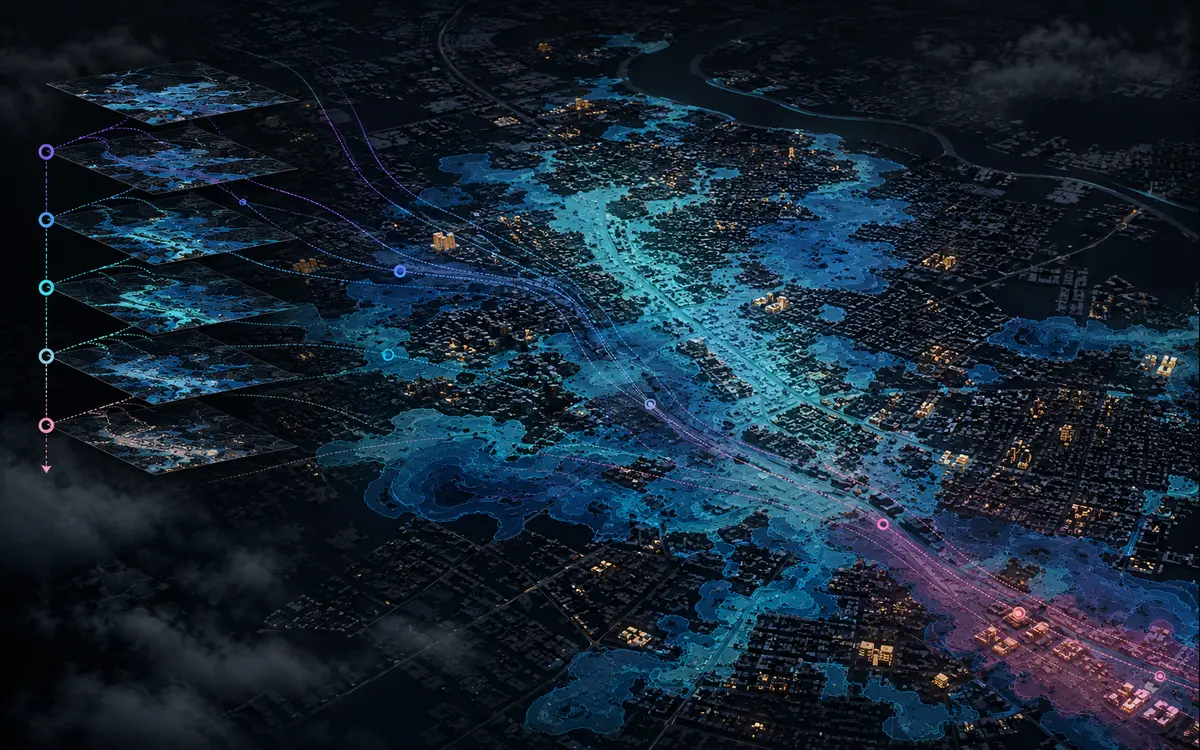
Hat Yai district report archive, 24–27 November 2025 · the view inspected on 10 October 2026 displays 5,104 reports · whole-area context: 382,545 residents and 149,794 buildings.
- Data period
- 24–27 Nov 2025 (event archive)
- Coverage
- Hat Yai flood event
- Level of detail
- Reports by recorded date
- Publisher
- Thai PBS / ThaiHelp
Start with a neighbourhood the team can discuss
Choose a part of Hat Yai connected with the team’s work and examine reports from the relevant date. A familiar place helps participants discuss service points, connections and the people involved using the same geographic reference. Then make the review small enough to handle: it might focus on communication between organisations or the information used to coordinate assistance. A bounded question turns a large archive into a manageable enquiry. It also helps the team identify who has first-hand experience to contribute. Instead of trying to explain the entire event at once, the group can begin with one part of the city and develop the account together.
Give each report its place in the sequence
The 24–27 November window provides a clear sequence for organising the reports. Begin with the date on a record and read the available original account before connecting it with material from another day. Keep the location and reporting source beside the team’s notes. When a participant adds information, everyone can see which place and part of the event they are discussing. This makes follow-up more precise: the group can ask about a particular report or sequence rather than a general memory of the flood. The archive becomes a reference for reconstructing the discussion, with a clear route back to the records that prompted it.
Let the review reflect the work people actually do
Community groups, service providers and area-based teams may be interested in different parts of the experience. Use the same map while separating questions by the work involved. What information needed to pass between teams? Which places would benefit from easier access to coordination records? Treat these as topics for the participants to examine and develop together. Keeping reports connected with their locations gives the conversation a common reference even when the responsibilities differ. One team can describe its information needs and another can explain its own part in the process. The result is a more concrete discussion of how those responsibilities meet in a particular place.
Leave a record the next team can pick up
A useful outcome can be a one-page neighbourhood review containing the map, dated references, lessons discussed and follow-up work. Identify who will help collect documents or contribute experience on each topic, then return to the same scope when reviewing progress. This preserves working knowledge with the place. A person joining the team later can follow the original references and understand why a question was raised. The review becomes easier to maintain because its boundaries are clear and its next tasks are named. Four days of archived reports can then support a longer conversation about how people prepare to work together in that neighbourhood.
Explore your own place
Choose a neighbourhood and date, read the original reports, and develop a lessons record with the people connected to that place.
Sources and reading notesPublisher, period, coverage and references
Specialist source
- Data publisher
- Thai PBS / ThaiHelp case reports
- Source
- Brings together Thai PBS and ThaiHelp reports for the Hat Yai event. Read the report date and source of each record.
- Data period
- Period not confirmed — check the reference date in the data view before use.
- Coverage
- Hat Yai flood event, 24–27 November 2025
- Level of detail
- Dated reports are evidenced; the smallest event geography is not verified
Further notes for comparison or citation
This is a time-bounded event archive, not current conditions or a complete damage total.
This is a Hat Yai event archive, not a reusable flood layer or a full impact assessment
Use as a 24–27 Nov 2025 event archive for sequence and context—not as a reusable flood layer or complete impact assessment.
The 5,104 figure counts reports, not distinct events or affected people. The 382,545 residents and 149,794 buildings describe the area, not affected totals. This archive concerns 24–27 November 2025, not current conditions.