Living· CityMETER · Mae Sai, Chiang Rai · a DDPM source-context case
Mae Sai: what a dated disaster report can help a community ask
Disaster: Historical ImpactsA DDPM report dated 10 September 2024 describes flooding from the Sai River reaching Sai Lom Choi market and communities in Mae Sai. Naming those places brings disaster history closer to everyday life. It also opens a practical question: how can dated local reports help a community prepare its next discussion?
A view inside CityMETER
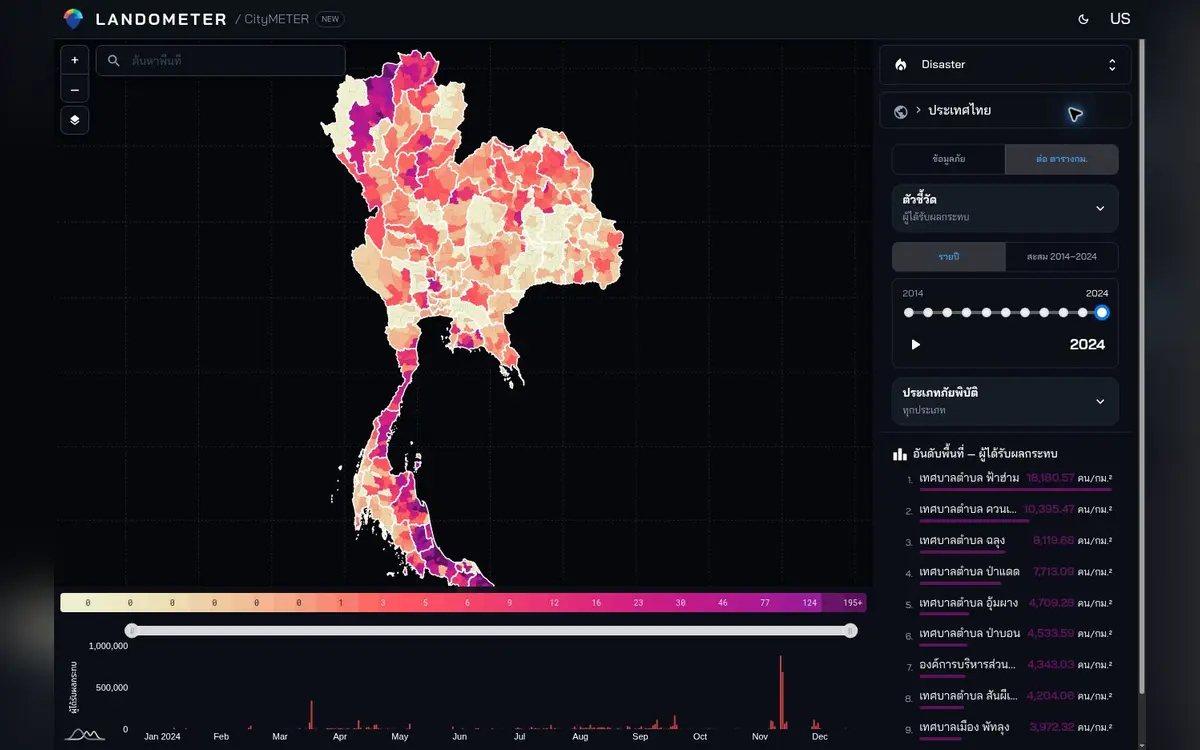
Place context comes from DDPM’s report of 10 September 2024. The CityMETER view inspected on 10 October 2026 offers historical impact records for 2014–2024.
- Data period
- Annual records, 2014–2024
- Coverage
- Read the details in sources
- Level of detail
- Disaster and impact reports · area/year summaries
- Publisher
- Department of Disaster Prevention and Mitigation
Let a named place focus the conversation
This Mae Sai example starts with the original DDPM account and its named location and date. It gives a review group something concrete to discuss. If the topic is the market area, who should be invited to contribute experience and relevant records? Starting with one place keeps the enquiry manageable before it expands to surrounding areas or other periods. The map of historical reports can help organise the geographic study, while conversations and local documents add detail. The team can agree on a place, a period and a subject to investigate, making the next meeting easier to prepare and the resulting notes easier to understand.
Choose the year and impact that match the question
CityMETER’s 2014–2024 selections offer a way to examine the history of an area by year and hazard type. Begin with the effect the group wants to understand, such as reported impacts on homes, livelihoods or infrastructure. Read the relevant records within that shared frame. Separating the topics helps participants know which part of the experience is being reviewed and what supporting material would be useful. If the assignment covers several subjects, turn them into smaller questions with someone responsible for following each one. That gives the map-reading exercise a practical structure and connects the historical information with the different people involved in local preparedness work.
Build a review around dates, places and records
Keep the location, report date, impact category and original reference together as the review develops. Arrange local authority or service-provider records alongside the period being studied. This can lead to questions about communication, access to places or the restoration of everyday activities, each of which can be taken to the people involved. A dated review is also easier for a new participant to follow. Someone with first-hand experience can add a missing detail or clarify a particular point without having to reconstruct the whole discussion. The value lies in making the history traceable and giving the group a shared account to work through.
Finish with a small set of follow-up tasks
After reading the records and hearing from the community, finish with a short list of follow-up tasks. These might include reviewing contact arrangements, gathering documents for a service point or choosing a subject for a joint exercise. Retain the place and experience that prompted each question. At the next review, the team can see what has been learned and which topics would benefit from another participant. Historical reports then become the beginning of a continuing learning process. The work is small enough to assign, clear enough to revisit and connected to the local experience that future teams will need to understand.
Explore your own place
Choose a place and period, keep the original reports, and invite the relevant people to turn the review into shared follow-up questions.
Sources and reading notesPublisher, period, coverage and references
Reference checked
- Data publisher
- Department of Disaster Prevention and Mitigation
- Source
- References DDPM village-level disaster statistics, recording events, locations and impacts as reported.
- Data period
- Annual CSVs for 2014–2024; latest verified data year is 2024.
- Coverage
- A Thailand summary view is visible; source coverage is not stated
- Level of detail
- Reported disaster and impact records with area and year summaries
Read the references
Further notes for comparison or citation
The reports cover 2014–2024. One event may produce several records, so check the counting basis before adding totals. This is not a risk rating or forecast.
Historical impacts are not current risk; period, source, and reporting limitations still need documentation
Use for historical impact comparison and follow-up; one event may span several rows and the data is neither forecast nor current conditions.
The Mae Sai example cites the original DDPM report of 10 September 2024. Its match to individual CityMETER rows has not been verified. Historical reports support an event review, not a forecast or a current risk rating.