Living· CityMETER · Thailand · geographically matched records for fiscal year 2015
Allocated and disbursed: reading the 2015 budget through places
Government Budget & DisbursementFor geographically matched fiscal-year 2015 records, CityMETER displays an adjusted budget of 59,344.5 million baht and disbursements of 40,831.4 million baht, or 68.8%. Reading them together opens a practical question: which stage of the spending process does each amount describe?
A view inside CityMETER
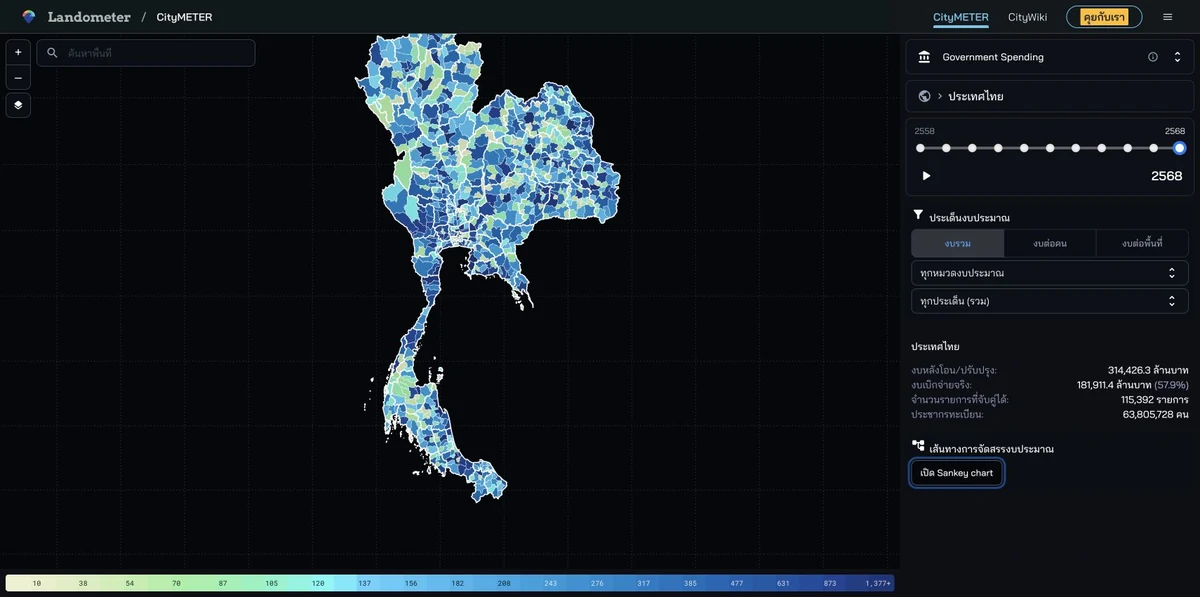
Fiscal year 2015 · 44,878 geographically matched items · amounts in million baht · inspected on 10 October 2026.
- Data period
- Fiscal years 2015–2025
- Coverage
- Line items matched to geographic areas
- Level of detail
- Budget and disbursement · agency/project · million THB
- Publisher
- GFMIS source records · published by PBO / Thaith
Two stages in the same financial story
An adjusted budget and a recorded disbursement describe different stages. Keep the column name beside the amount when reading a place-based comparison. The PBO manual describes GFMIS records with separate fields for adjusted budgets, disbursements and purchase-order commitments. Those distinctions give a project enquiry a clearer starting point. A reader can identify which figure prompted the question and then look for information about that stage of the work. The percentage becomes easier to discuss because its two underlying amounts remain visible.
A place gives the budget enquiry an address
A place-based view helps turn a broad spending question into a manageable enquiry. Begin with the year and area connected to the work, then examine the agencies or project types attached to the available items. For someone preparing a conversation about community services, the useful result may be a short list of records to read in more detail. Each item can lead to a more focused request for information. The map supplies a way into the material, while the financial labels keep the discussion tied to the right stage.
Keep the year and unit attached to the comparison
The displayed amounts are in million baht. Carrying that unit and the fiscal year into a note or presentation preserves the meaning of the figures. Before comparing places, decide whether the enquiry concerns adjusted amounts, disbursements or the relationship between the two. Apply that choice consistently and keep the relevant item names alongside the comparison. This makes the work easier for a colleague to follow. They can return to the same records and understand which part of the financial picture led to the next question.
Follow the money with a specific question about the work
After reading the figures, select one item connected to the issue being studied and continue into its project documents or agency reports. Ask what the work involves, which period it covers and what information describes its progress. These questions connect a financial record to the activity that people want to understand. The 2015 example offers a concrete starting point for that sequence. It helps a reader move from a large amount on a screen to an identifiable record and a question that the responsible organisation can address.
Explore your own place
Choose a year and area, then follow one item from adjusted budget to disbursement and its project documents.
Sources and reading notesPublisher, period, coverage and references
Compiled or derived data
- Data publisher
- GFMIS source records; dataset published through PBO / Thaith
- Source
- The PBO Budget manual describes GFMIS line items for FY2015–2025, with adjusted budgets, disbursements and PO commitments in million baht. CityMETER’s geographic matching has a separate coverage boundary from the source files.
- Data period
- PBO reference: fiscal years 2015–2025. The map offers the same year range; every source file and mapped item has not been reconciled.
- Coverage
- Available fiscal-year selections are 2015–2025; mapped data is the subset matched to areas
- Level of detail
- Budget and disbursement line items by year, ministry, agency and project; source amounts are in million baht
Further notes for comparison or citation
The map includes only geographically matched records. Spending alone does not establish better services or value for money.
The map shows only geographically matched items, not the full national budget. Keep adjusted budget, disbursement and purchase-order commitments separate. A source dash is not zero; amounts alone do not establish project outcomes or value for money.
Captured on 10 October 2026. Values and available controls may change in the live service.