Location· CityMETER · Lam Pla Nao, Bangkok
Where would a repeat-meal service enquiry begin in Lam Pla Nao?
Locale InsightsLam Pla Nao’s model view assigns spending readiness 48/100 with evidence quality C+, and suggests testing repeat-meal service, access and parking questions. Its useful starting point is an enquiry to take to local people: which of these ideas fits the area they know?
This finding is based on
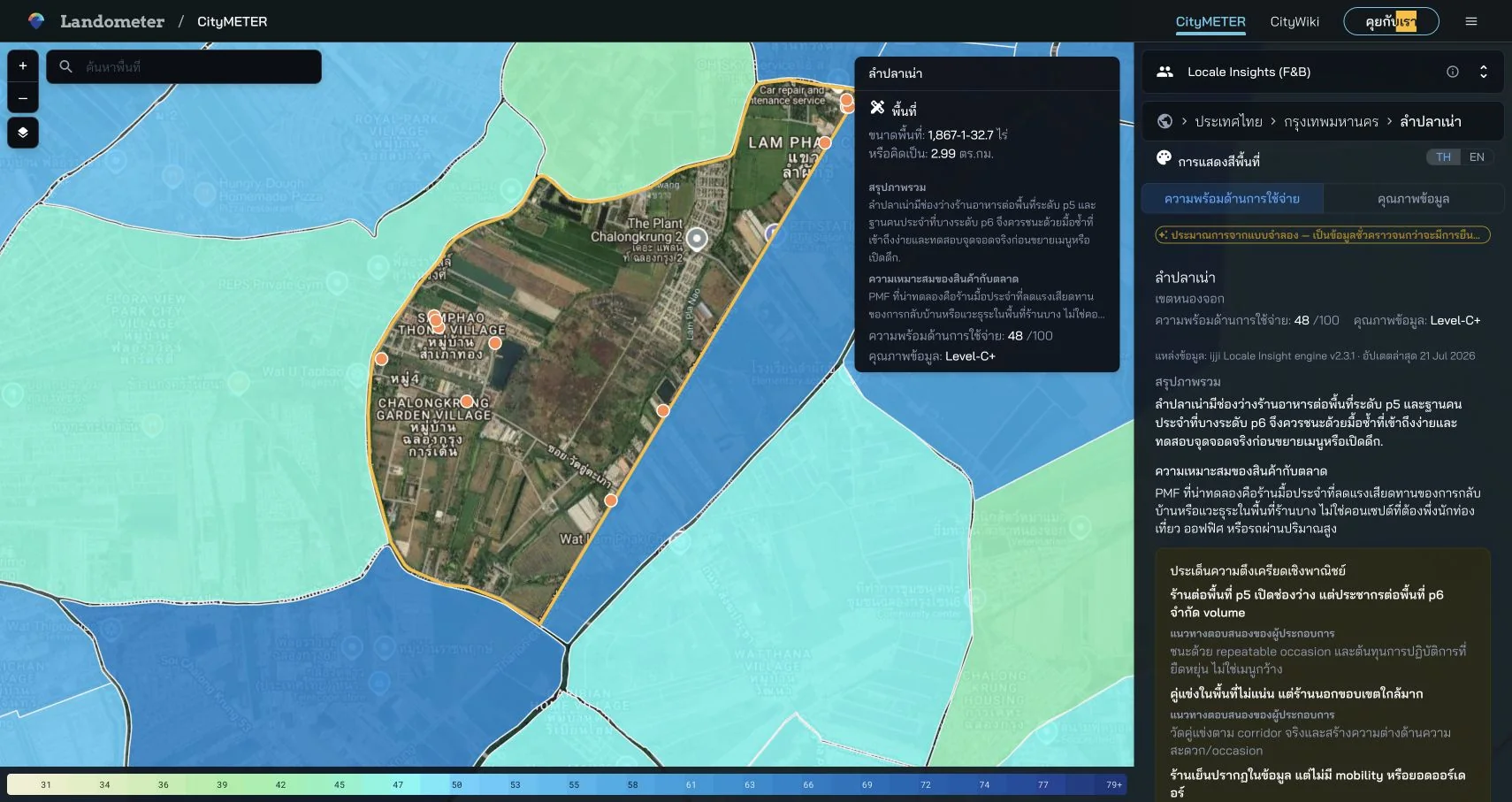
Lam Pla Nao · individual locale view, displayed area 2.99 km² · inspected on 10 October 2026 · modelled contextual starting point, evidence quality C+.
- Data period
- Read the details in sources
- Coverage
- Default Bangkok view
- Level of detail
- Locale units · derived area context
- Publisher
- CityMETER — LLM-assisted contextual layer
Make the model’s suggestion testable in conversation
A repeat-meal service idea becomes useful when translated into questions local people can answer: convenient times, desired service arrangements and how a place is reached. The Lam Pla Nao view helps organise those subjects into an initial agenda. A field team gains shared topics for conversation and can later review which suggestions received support and which need revision. This is a practical use of the model: to make the first enquiry more focused and provide a record of the ideas that were taken into the conversation.
Keep the evidence grade beside the score
The 48/100 score and C+ grade should remain together whenever the team discusses this view. Retain the locale name and identifier too, so everyone knows which record is under consideration. Place a testable question beneath the score, choosing a subject connected to the actual service assignment, such as access or contact arrangements. Then specify whom to ask and how to gather the answer. The numerical cue gains a clear role in the work: it helps organise an enquiry whose next evidence comes from deliberate investigation.
Define the place where the conversation will happen
The selected Lam Pla Nao view displays an area of 2.99 square kilometres. Define where the conversations will take place, with a meeting point and questions for local participants. A shared understanding of the fieldwork area helps divide responsibilities: who will ask about access, who will explore preferred service times, and how will the answers be discussed afterwards? The locale view gives the enquiry a starting place. Its finer detail can then develop through what the team learns with the people it meets.
Return with something learned about the place
A field visit should return with at least some answers to the starting questions, such as the access issues people emphasise or a condition needing further investigation. Keep attribution, date and method clear, and distinguish those findings from the model’s suggestions. The Lam Pla Nao view then becomes the beginning of a learning process. Local people contribute detail, the team revises its questions and service planning can proceed with a more explicit account of what has actually been learned about the place.
Explore your own place
Choose one Lam Pla Nao hypothesis, such as access to a meal service, and design a short set of questions to test with local people.
Sources and reading notesPublisher, period, coverage and references
Compiled or derived data
- Data publisher
- CityMETER derived / LLM-assisted contextual layer
- Source
- CityMETER synthesises area context from several signals, including language-model assistance. Use it to frame questions and guide field validation.
- Data period
- Period not confirmed — check the reference date in the data view before use.
- Coverage
- The default page is scoped to Bangkok; the full locale coverage is not published
- Level of detail
- Locale is the smallest selectable unit; geometry and service-boundary crosswalks are not verified
Further notes for comparison or citation
Context is not official population, observed behaviour, eligibility or risk. Crosswalk locale_id to verified boundaries before aggregation.
Use as contextual input for service planning, field validation, engagement and prioritisation. Link locale_id to verified administrative or service boundaries before aggregation. It is not official population, observed behaviour, eligibility or risk determination.