Location· CityMETER · Thailand
Retail places extend well beyond the shopping mall
Shopping Centres, Markets & Retail SitesOf the 10,869 retail-site records in the displayed inventory, 4,168 are in the market category. This is a view of retail places extending beyond malls, giving a market study several kinds of site to consider before choosing the relevant comparison.
A view inside CityMETER
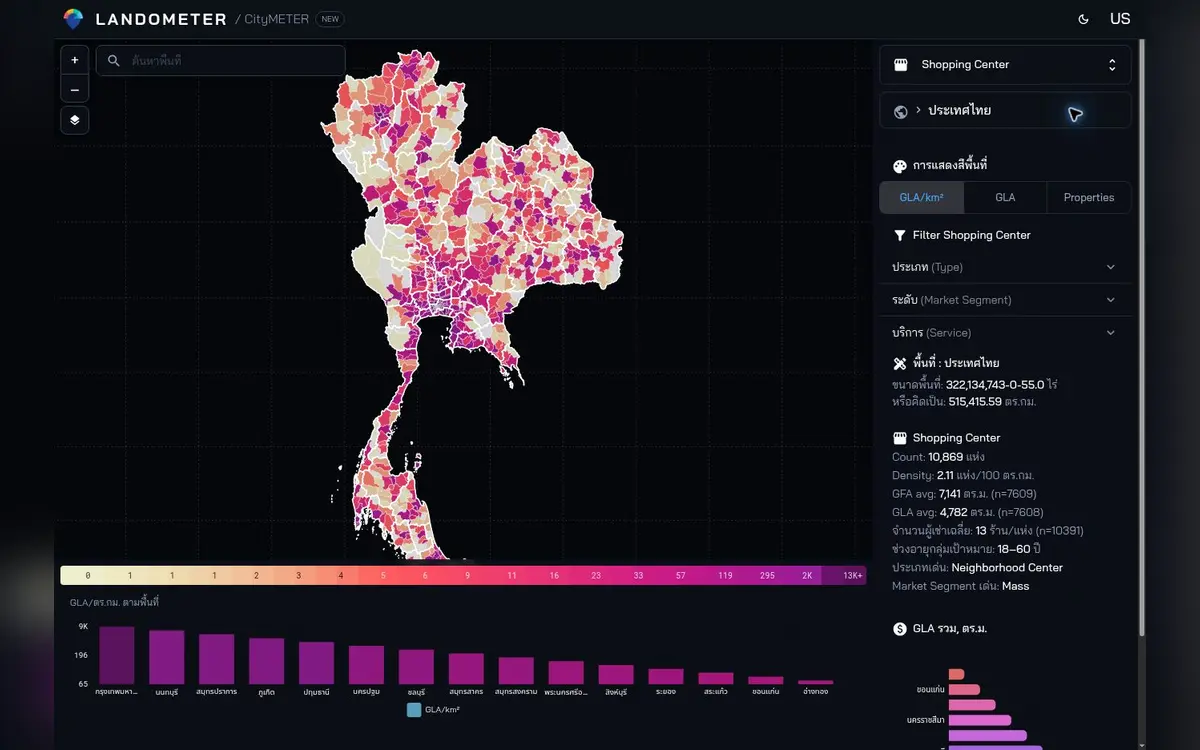
Thailand · inspected on 10 October 2026 · retail sites by type · site sources in this release carry dates from 28 May to 20 July 2026.
- Data period
- Site-source dates: May–Jul 2026
- Coverage
- Read the details in sources
- Level of detail
- Retail sites · recorded GFA / GLA and tenants
- Publisher
- Read the details in sources
The type of place changes the enquiry
A person seeking a retail location might begin with the broad idea of a shopping centre, while the relevant comparison could be a market or another retail format. Separating site types makes the enquiry more precise. For a strategy team, a useful first choice is the format connected to the intended merchandise and service arrangement. Then examine where the relevant records appear in the target area. The inventory can support several kinds of enquiry because it keeps those formats identifiable, allowing the reader to build a comparison around the actual assignment.
Floor area has more than one meaning
GFA and GLA need their names, units and site references retained. Gross floor area describes an aspect of the building’s overall space; gross leasable area concerns the space identified as leasable in the relevant source. Keeping the measures separate makes a conversation with a site representative more focused. The overall scale of a building and the space a retailer can enquire about occupy different parts of a location study. Clear measures help a team know which figure it is discussing and which practical question should follow from it.
Read the site through its composition
Tenant or composition information available for a site can guide questions for a visit: which merchandise groups are represented, how the space is approached and where a prospective retailer should make contact. Use the available records to prepare the enquiry, then add answers obtained from the operator or through observation. Keep source and date beside each measure. A colleague can then understand which version supplied a detail and how later information developed the picture, instead of receiving an apparently uniform inventory whose records actually came from different site references.
Choose the comparison before choosing the destination
From an inventory containing markets and several other retail formats, select the group relevant to the work and define a study area. Build a contact list with questions about leasable space and site composition. The 4,168 market records are useful because they show that the initial field of enquiry can be broader than the format first imagined. Site-by-site follow-up then makes that field more specific. The outcome is a considered set of places to investigate, connected to the intended market and a clear set of questions for their operators.
Explore your own place
Choose the retail-site type first, then select sites in one area for enquiries about leasable space, tenant composition and relevant terms.
Sources and reading notesPublisher, period, coverage and references
Source details still need confirmation
- Data publisher
- Original shopping-center inventory publisher not yet verified
- Source
- Sources differ by site and measure, including floor area, leasable area and tenants. Read each site’s sources before comparison.
- Data period
- Sources in the inspected release are dated 28 May–20 July 2026; dates vary by site.
- Coverage
- A Thailand summary view is visible; source coverage is not stated
- Level of detail
- Retail sites by type; GFA, GLA and tenant-count coverage differ
Further notes for comparison or citation
GFA, GLA and tenant data vary in completeness. Estimates and venue counts do not measure sales or footfall.
The inventory includes several retail-site types. GFA, GLA and tenant coverage differ; distinguish estimates from sourced measurements. Site counts are not sales or customer counts.